
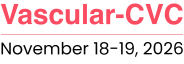
The landscape of vascular medicine is shifting at an extraordinary pace, largely propelled by technological innovation, regenerative therapies, and the rise of personalized medicine. Advanced interventions such as stem cell and gene therapies are at the forefront, seeking not merely to manage symptoms, but to actively repair vascular damage and promote new vessel growth. For conditions like peripheral artery disease or critical limb ischemia, these emerging treatments hold the promise of fundamentally altering disease trajectories by addressing the underlying pathology.
Concurrently, artificial intelligence and machine learning are becoming increasingly integral to vascular diagnostics and patient care. AI-driven imaging analysis and predictive models are enhancing diagnostic precision, facilitating earlier detection of disease, and enabling more individualized treatment strategies. This integration is fostering more informed clinical decision-making, timelier interventions, and, ultimately, improved patient outcomes.
The field is also witnessing rapid advancements in minimally invasive and endovascular procedures. New devices, refined techniques, and cutting-edge materials are contributing to safer, more effective interventions. Together, the convergence of regenerative medicine, digital health technologies, and sophisticated interventional approaches heralds a future in which vascular disease can be managed with greater efficacy, leading to superior functional recovery and enhanced quality of life for patients on a global scale.
Welcome to the Vascular Medicine Conference 2026, a world-class global platform for the exchange of knowledge, discovery of innovations, and networking with thought leaders propelling the future of vascular health.
vascular.cvc@stemnetwork.net
+1 (872) 2138-777
+41 77 414 46 91
Plot no. 85 & 88, Sardar Patel Nagar Rd,
Beside Community Hall, Sardar Patel Nagar, Hydernagar, Kukatpally, Hyderabad,
Telangana 500085
