
Varicose veins—those visibly enlarged, twisted veins often seen in the legs—arise when weakened vein walls or faulty valves allow blood to accumulate. The condition typically manifests as prominent, bulging veins, accompanied by sensations of heaviness, aching, swelling, and, in some instances, pruritus or cutaneous changes. Contributing factors include extended periods of standing, obesity, pregnancy, advancing age, and a hereditary predisposition to venous disease. Though frequently dismissed as a cosmetic issue, varicose veins can provoke significant discomfort and, occasionally, progress to serious complications such as venous ulcers or thrombotic events.
Management strategies encompass conservative approaches—compression stockings, regular physical activity, and leg elevation—as well as minimally invasive interventions like endovenous ablation, sclerotherapy, and laser therapy. Early and appropriate treatment can mitigate symptoms, deter progression, and yield improvements in both functional and aesthetic outcomes. With diligent care, individuals can alleviate discomfort, enhance venous circulation, and sustain vascular health over time.
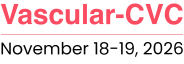
Welcome to the Vascular Medicine Conference 2026, a world-class global platform for the exchange of knowledge, discovery of innovations, and networking with thought leaders propelling the future of vascular health.
vascular.cvc@stemnetwork.net
+1 (872) 2138-777
+41 77 414 46 91
Plot no. 85 & 88, Sardar Patel Nagar Rd,
Beside Community Hall, Sardar Patel Nagar, Hydernagar, Kukatpally, Hyderabad,
Telangana 500085
